Fruit flies in the house, and how to find what they're breeding in
Every fruit fly in the room hatched from something wet and organic inside your house. The list of places is short, and you can prove a drain with a plastic bag overnight. Find it and bin it, and after a few days of stragglers they stop.
By The Pest GuyLast updated
The short answer
A fruit fly infestation is a source you haven't found yet, and the source is always somewhere wet.
Fruit flies breed in fermenting, wet, organic stuff, and Purdue's extension service puts the search rule in one line: the larvae only survive in organic matter that is moist, so limit the inspection to areas with moisture. That turns the whole house into about seven places. Most of them are in the kitchen.
Start with the fruit bowl and the bottom of the potato and onion bags. Then the food caddy and bin, the recycling, under the fridge, the sink drain and the mop. If you've got home brew or homemade wine on the go, check every lid. The table below has what they live on at each spot and how to check it.
Killing the adults first is the wrong order. You'll clear the room and have another room's worth hatching in days. If you want the whole plan, from source to the last flies, it's in how to get rid of fruit flies. This page is the search.
Where fruit flies breed in a house, room by room
Each spot, what the larvae actually live on there, and how to check it. If it isn't wet, it isn't on the list.
| Where | What they breed on | How to check it | Source |
|---|---|---|---|
| Fruit bowl, veg rack, the back of a cupboard | Over-ripe tomatoes and bananas, rotting potatoes and onions. One forgotten potato or onion can breed thousands. | Lift everything out. Squeeze the bottom of the potato and onion bags. | University of Kentucky; Penn State Extension |
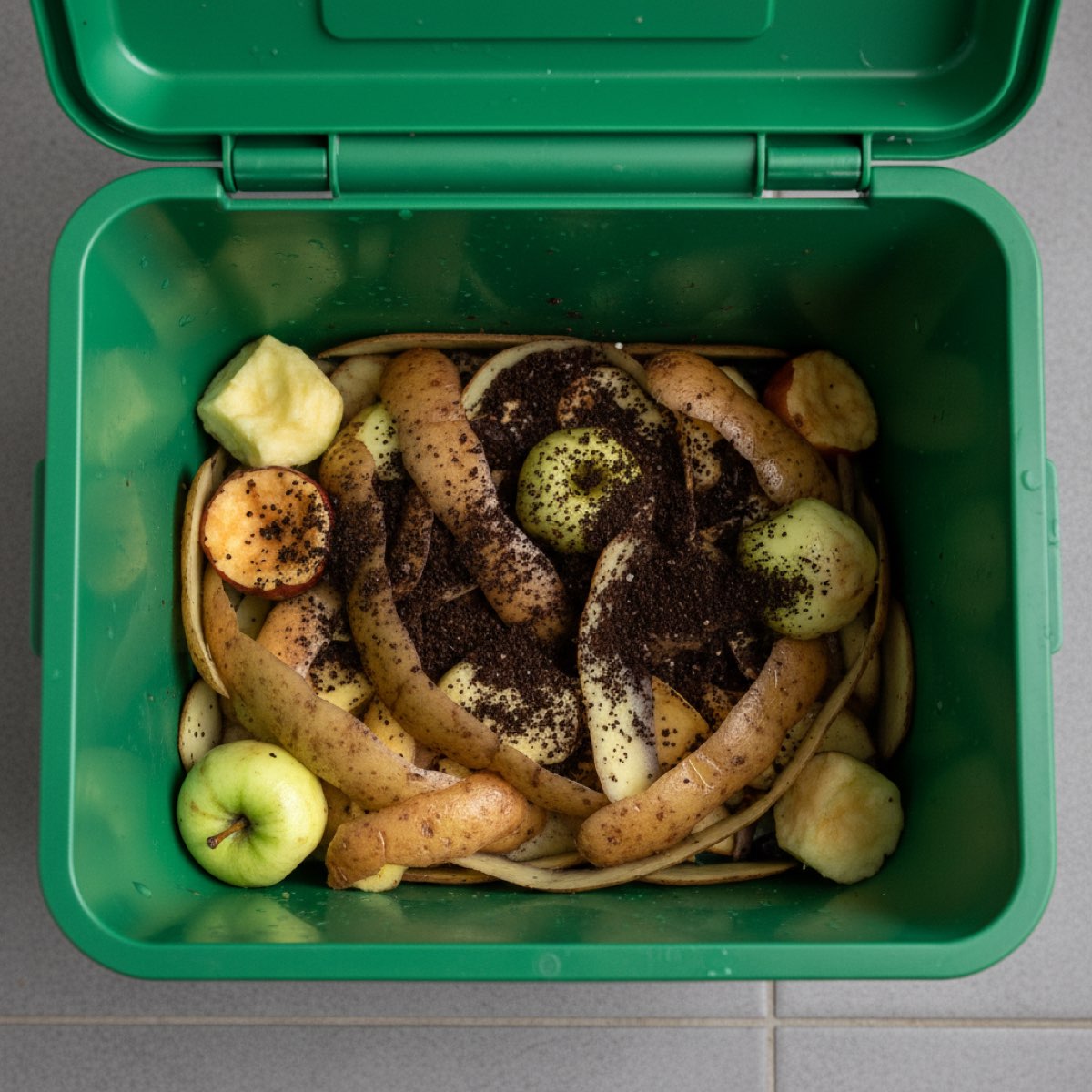
| Food caddy and kitchen bin | Rotting food residue in the bin, including what has stuck to it. | Empty it, then lift the liner out and look at the base and under the lid. | University of Kentucky; University of Arizona |
| Recycling | The last drop of juice, cider, wine or beer in an unrinsed can or bottle. A recycling bin never emptied or cleaned can breed thousands. | Tip it out and smell the cans. Rinse everything before it goes in. | Penn State Extension; University of Kentucky |
| Under and behind the fridge, cooker and dishwasher | An old juice spill, or food particles collected behind or under kitchen equipment. | Pull the appliance out. Look where the feet meet the floor. | University of Kentucky; Penn State Extension; Purdue |
| Sink and floor drains | The gelatinous scum lining the pipe. Bleach and hot water will not clear it. | Tape a clear food bag over the plughole overnight. Flies in the bag in the morning means it is breeding. | University of Kentucky; Scottish Government; Penn State Extension; Purdue |
| Mop, mop bucket and cleaning cloths | Anything left wet and soured. | Smell it. Rinse, then store the mop head up so it dries. | Penn State Extension; University of Kentucky; University of Arizona |
| Home brew, homemade wine and cider, preserves | Fermenting fruit and drink in a container that is not properly sealed. | Check every lid and airlock. Seal it. | University of Kentucky |
Sources: University of Kentucky Entomology (ENTFACT-621); Penn State Extension (Vinegar Flies, HP-20); Purdue Extension (Small Flies, E-233-W); University of Arizona Extension (AZ2052); Scottish Government statutory nuisance guidance (2009). Penn State notes the larvae feed mainly on the yeast in fermenting, liquefying food, which is why every row is something going off.
Why there are suddenly so many
Nothing invaded. One thing started breeding, and the numbers do the rest.
The University of Kentucky puts it at about 500 eggs per female and about a week from egg to adult. Penn State says adults are breeding within two days of emerging, and the full cycle can run in as little as eight days at 29C. Cooler slows it down: Arizona's extension sheet gives about two weeks at 25C. Either way, by the time you notice a dozen, the next lot is already in whatever they came from.
They're most common in late summer and autumn, when fruit is ripening and fermenting. That's when a bowl of bananas or a bag of garden tomatoes turns from food into a nursery. The eggs can come home on the fruit in the first place, which is the subject of where fruit flies come from.
If you want a yardstick for how many counts as a lot, the Scottish Government's guidance on statutory nuisance gives one: an occupier will normally feel some distress at 50 or more flying fruit flies in one room at one time, on three days running. That's a guideline for judging a nuisance, not a rule about your house, but it's a fair measure of when a few flies have become an infestation.
Is my house dirty if I have fruit flies?
No. It means one thing is wet and going off somewhere you haven't looked.
Kentucky's fact sheet says infestations can start from fruit or vegetables that were already infested when they were brought into the home. So you can carry them in from the shop. The same sheet says a single rotting potato or onion at the back of a cupboard, or a juice spill under the fridge, can breed thousands of fruit flies. That's one item. The rest of the kitchen can be spotless.
What they do tell you is where you haven't been. The places on the list are the ones nobody cleans every week: under the fridge, the inside of the caddy lid, the bottom of the recycling, the pipe below the plughole. People on a Mumsnet thread about it found an old bag of potatoes at the back of a cupboard, a pub sink trap, and a lidded compost box. None of those is a dirty house. All of them are a forgotten corner.
Whether they're a health worry is its own question, covered in are fruit flies harmful.
How to find the source, and prove it
Search where it's wet, kitchen first, then test anything you can't see into.
Go in this order, because it runs from the most likely to the least. Fruit and veg first: lift everything out of the bowl and the rack, and feel the bottom of the potato and onion bags. Kentucky's sheet says the larvae feed near the surface, so a soft patch on a piece of fruit can be cut away and the rest kept. Anything soft and leaking goes.
Then the bins. Empty the caddy and the kitchen bin, lift the liner out, and look at the base and under the lid. Then the recycling. Penn State says the liquid left in the bottom of a beer can held for recycling can support the larvae, and Arizona notes fruit flies like juice and fizzy drinks. Rinse cans and bottles before they go in, every time.
Then pull the fridge out. Kentucky singles out a juice spill under the fridge, and Penn State names food that collects behind or under kitchen equipment. Do the same for the dishwasher and the cooker if they move. While you're down there, check the mop and bucket: a mop left wet and sour is on both universities' lists. Store it head up so it dries.
Last, the drains. You can't see into a pipe, so test it. Kentucky and the Scottish Government both give the same method: tape a clear plastic food bag over the opening overnight. If flies are breeding in there, the adults that emerge are trapped in the bag by morning. Do it on each sink, the bath and any floor drain, one at a time if you can, so you know which one it is.
A drain that tests positive needs scrubbing. Purdue is blunt that bleach and hot water will not clear a breeding site in a drain, because the larvae are living in the scum stuck to the pipe wall. It needs a brush down the pipe, and a drain cleaner if you use one, used as its label says. A kettle poured down it every night won't reach them.
If the flies at the plughole are fuzzy and shaped like tiny moths, that's a different fly. Drain flies breed in drains too, and a fruit fly trap isn't made for them. What fruit flies look like has the tells side by side. And if they're full-size flies, house flies or bluebottles, that's a different search altogether, set out in flies in the house.
Fruit flies with no fruit, and fruit flies in the bedroom
Two of the commonest searches, and both come back to the same list.
No fruit in the house doesn't rule them out. Kentucky's list includes drains, bins, empty bottles and cans, mops and cleaning rags, and Penn State adds any soured, decaying substance. If the fruit bowl is empty, the recycling and the drains go to the top of the search.
In a bedroom, look for the same things in miniature: a glass with an inch of juice or wine left in it, a can, an apple core in the bin, a banana skin in a bag. Penn State also notes that in summer adults are drawn to light through windows and are small enough to get through a standard window screen, so a few in a bedroom on a warm evening can simply have flown in.
If the tiny flies are coming off a plant pot, they're probably not fruit flies at all. Small flies around damp compost are usually fungus gnats, which breed in the soil and need a different fix. The difference is set out in fruit flies vs fungus gnats, and the plant-pot case in fruit flies in plants.
Why they keep coming after you've binned it
Because the next lot had already left the fruit before you found it.
Penn State's sheet has the detail that explains it: the larvae usually leave the food to pupate after feeding for about a week or less, and the adults emerge several days later. So when you bin a rotten bag of onions, some of the next generation may already be sitting next to it, on the shelf or in the cupboard, not in it. Expect a few more flies for several days. That isn't the source coming back.
Wipe down the shelf or cupboard where the source was, and keep an eye on how many you see. If the numbers fall away over the next few days, you found it. If they hold steady, there's a second source and it's back to the table. How long the stragglers can live is covered in how long fruit flies live.
Spray doesn't change any of this. Penn State's wording is that fogs and sprays kill the adults while the larvae carry on developing and new adults emerge. If you're weighing it up anyway, does fly spray kill fruit flies covers what it does and doesn't do. The job for the next few days is catching the adults that are already out, which is what a fruit fly trap is for.
For the flies still hatching while you clear the source
Once you've found and binned the source, this catches the adults still emerging over the next few days. Put it in the room where the source was, since that's where the stragglers come out. It's for fruit flies only. Flies from a plant pot or a drain still need the source found.
What I’d use
Reusable cider vinegar trap
Escape-proof fruit fly trap
A two-part cup and lid you fill with about 25 ml of cider vinegar and stand by the fruit bowl.
Eight slots in the lid feed a funnel that drops flies through one 4 mm hole into the dark middle of the cup. The brightest points a trapped fly can see are pinholes too small to get through, set away from the real exit, so the way out is the place they are least likely to look.
- Ways in
- Eight slots in the lid, into one funnel
- Way out
- One 4 mm hole, under the solid centre of the lid
- Holds
- About 25 ml of vinegar, to the moulded fill line
- Size
- 6.7 cm across, 5.4 cm tall
- Refills
- None to buy. It runs on cider vinegar from the cupboard
Watch out for
- Vinegar and washing-up liquid not included.
- Made for fruit flies. Flies from a plant pot or drain need the source found.
- Tip, rinse by hand and refill once it fills up.
That link earns me nothing. It is not an affiliate link, no brand pays for a mention here, and I get the same whether you buy this or ignore it. It is on the page because it is what the job takes.
No brand pays for a mention here, and nothing on this page earns me a commission. The card above links out to a shop, and I get the same whether you buy or ignore it. The link is there because finding the thing is the boring half of acting on advice, which is also why the watch-outs sit on the same card as the reasons to buy.
About this resource
The weight on this page is carried by university extension sheets and government guidance rather than pest-control marketing: the University of Kentucky's fruit fly fact sheet, Penn State's note on vinegar flies, Purdue's sheet on small flies, the University of Arizona's household flies leaflet, and the Scottish Government's guidance on the statutory nuisance provisions of the Public Health etc (Scotland) Act 2008.
The honest limit is that this page can tell you where fruit flies breed and how to check each place. It can't tell you which one is yours, or confirm from a description that what you've got is a fruit fly at all. The trap on this page is the cluster's one recommendation, and the note under it says plainly what the link is.
Common questions
Why am I suddenly infested with fruit flies?
Because a few weeks ago something started breeding and you didn't notice the first round. A female can lay about 500 eggs and the whole cycle from egg to adult can run in about a week in warm conditions, so one forgotten onion goes from nothing to a cloud very fast. They're also most common in late summer and autumn, when fruit is ripening and fermenting.
Is my house dirty if I have fruit flies?
No. The University of Kentucky's fact sheet says infestations can start from fruit or veg that was already infested when it was brought home, and that a single rotting potato, or a juice spill under the fridge, can breed thousands. One item is enough, and it can be in an otherwise spotless kitchen. What it does mean is that something wet and organic is sitting somewhere you haven't looked.
How do I find the source of fruit flies?
Only look where it's wet. Purdue's guidance is that the larvae only survive in moist organic matter, so the list is short: the fruit bowl and veg rack, the food caddy and bin, the recycling, under and behind the fridge and other appliances, the drains, the mop and cloths, and anything home-brewed. For a drain you can't see into, tape a clear food bag over the plughole overnight. Flies in the bag means it's breeding.
Why have I got fruit flies but no fruit?
Because they don't need fruit. They breed in the last of the juice or beer in an unrinsed can, in the scum lining a drain, in a soured mop, and in old spills behind kitchen equipment. Rinse the recycling, bag-test the drains, and pull the fridge out.
Why are fruit flies so hard to get rid of?
Because the flies you can see aren't the problem. Spray and traps deal with adults, while the larvae carry on developing wherever they're breeding. The Scottish Government's guidance puts it plainly: the problem will continue no matter how often insecticides are applied to the adults, until the breeding sites are found and removed. And even then, larvae that already left the food to pupate will keep emerging for several days.
Do fruit flies just go away?
Not while something is still feeding the larvae. Once you've removed the source, you're left with the ones already pupating nearby, which emerge over several days, and the adults already flying. That's the stretch a trap is for.
How do you get rid of a severe fruit fly infestation?
The same way as a mild one, done properly. Every possible breeding spot gets found and cleared, the drains and the recycling as well as the fruit, because the University of Kentucky's advice is that all potential breeding areas must be located and eliminated. Only after that does it make sense to deal with the adults left, with a trap or an ordinary fly spray used as its label says.